01
Task Management
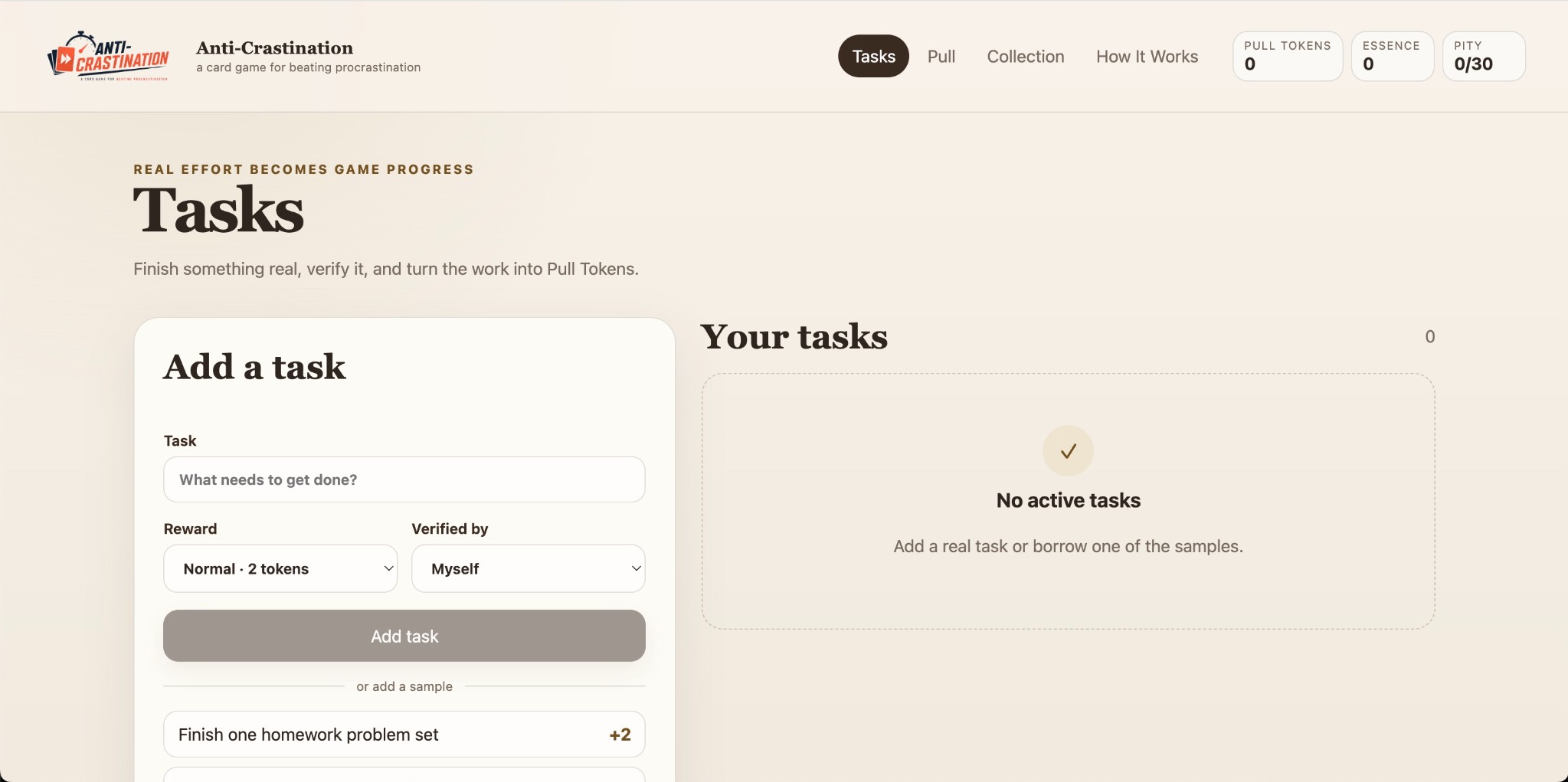
Create and complete real-world tasks.
Product design · Game design · UX/UI
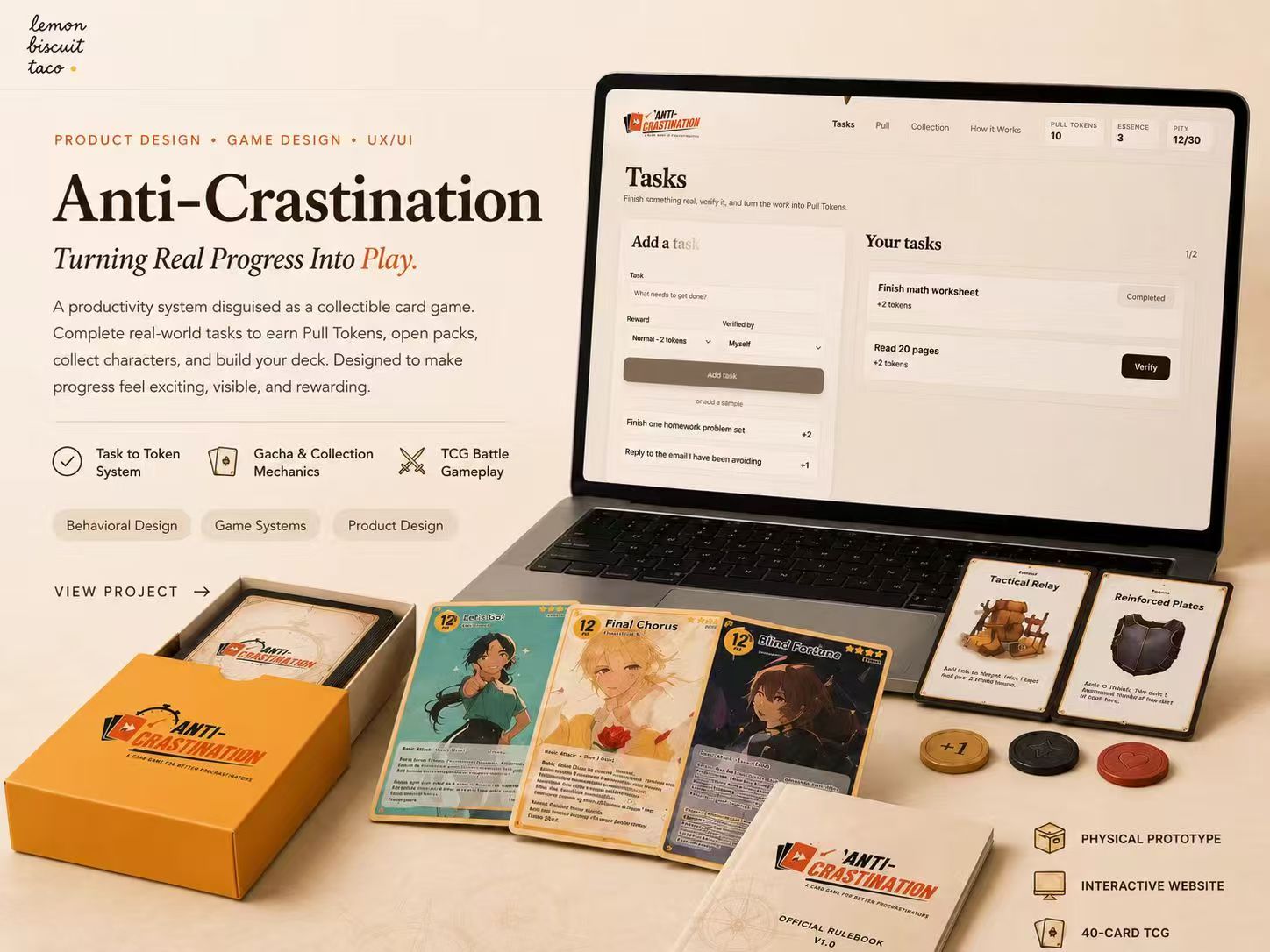
A productivity system disguised as a collectible card game, where completed effort becomes playable progress.
The best card game you're ever going to play (don't look that up)!
Project pitch
A quick walkthrough of the idea, physical card game, and digital companion.
What's the opposite of procrastination? Anticrastination! Hahaha (please laugh)
01 · The problem
What if completing a real task felt closer to opening a rare collectible than crossing off another obligation?
Traditional productivity systems lean on reminders, streaks, deadlines, and guilt. Anti-Crastination explores a different lever: redesign the reward loop itself. Instead of rewarding motivation, the system rewards completed action.
Rather than asking users to become more disciplined, the project makes real-world progress produce immediate, visible game progress.
The complete loop
The reward is designed to return the player to real life rather than replace it.
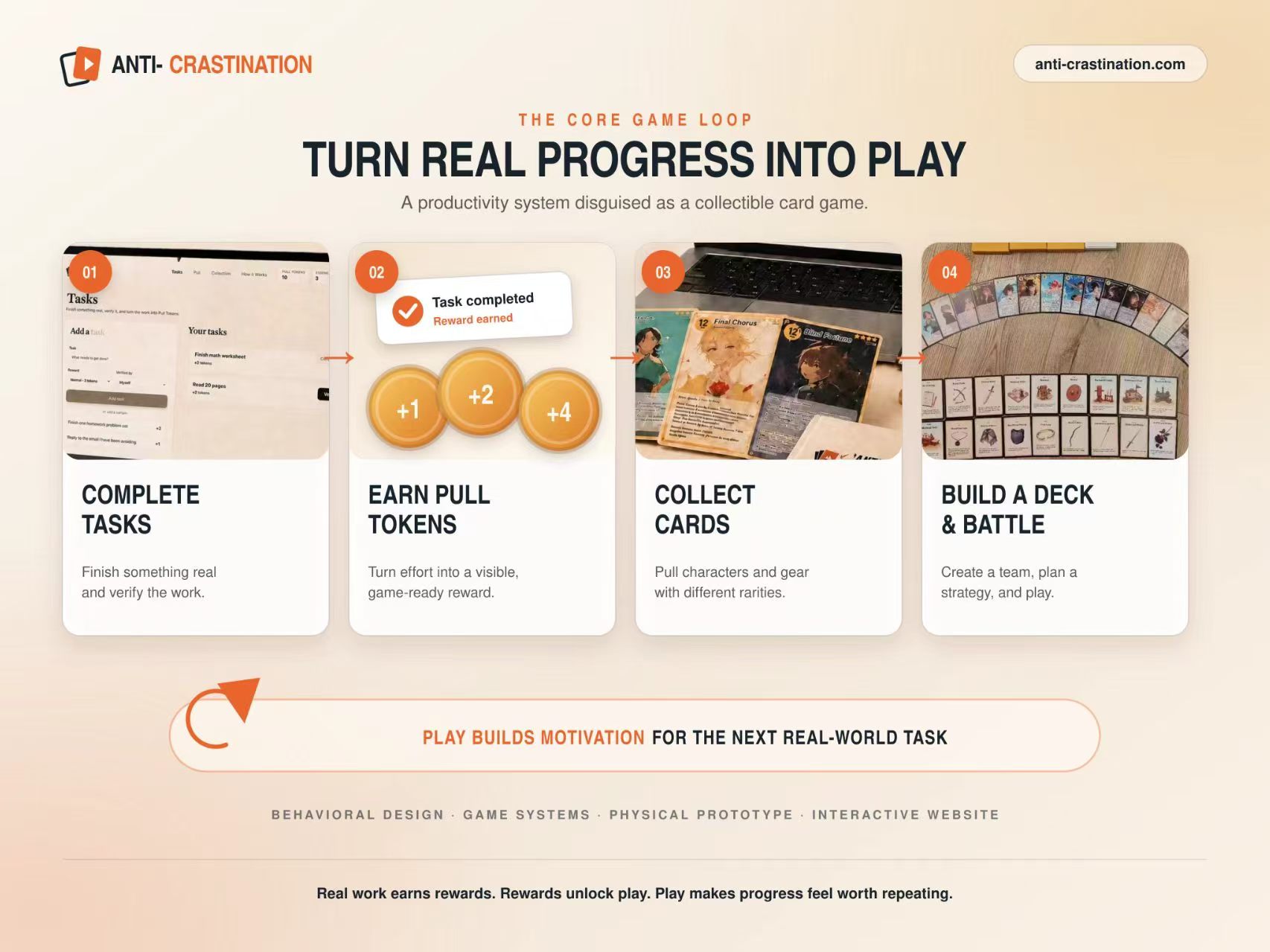
Now, every collectible represents completed effort in the real world.
02 · Physical game
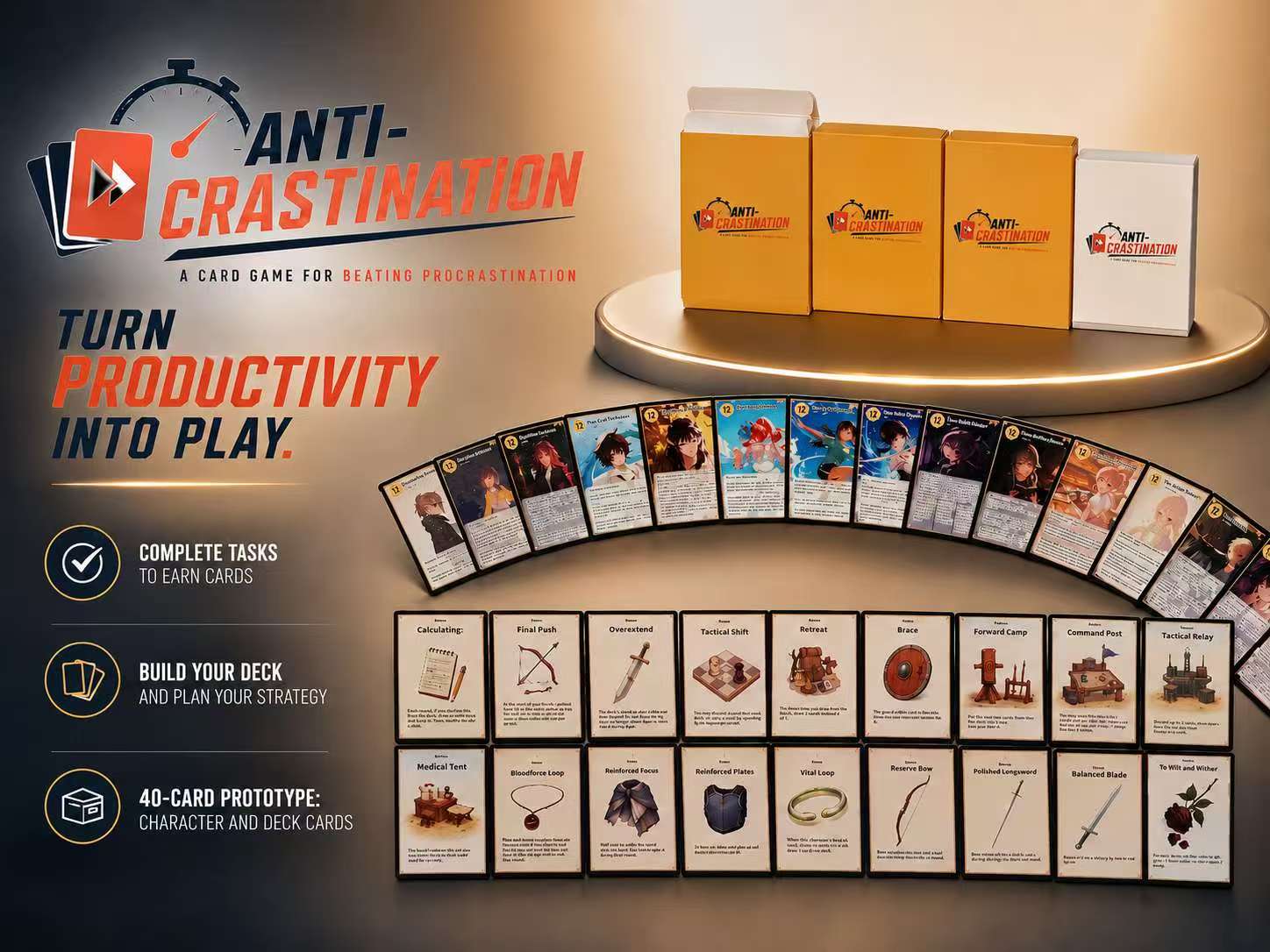
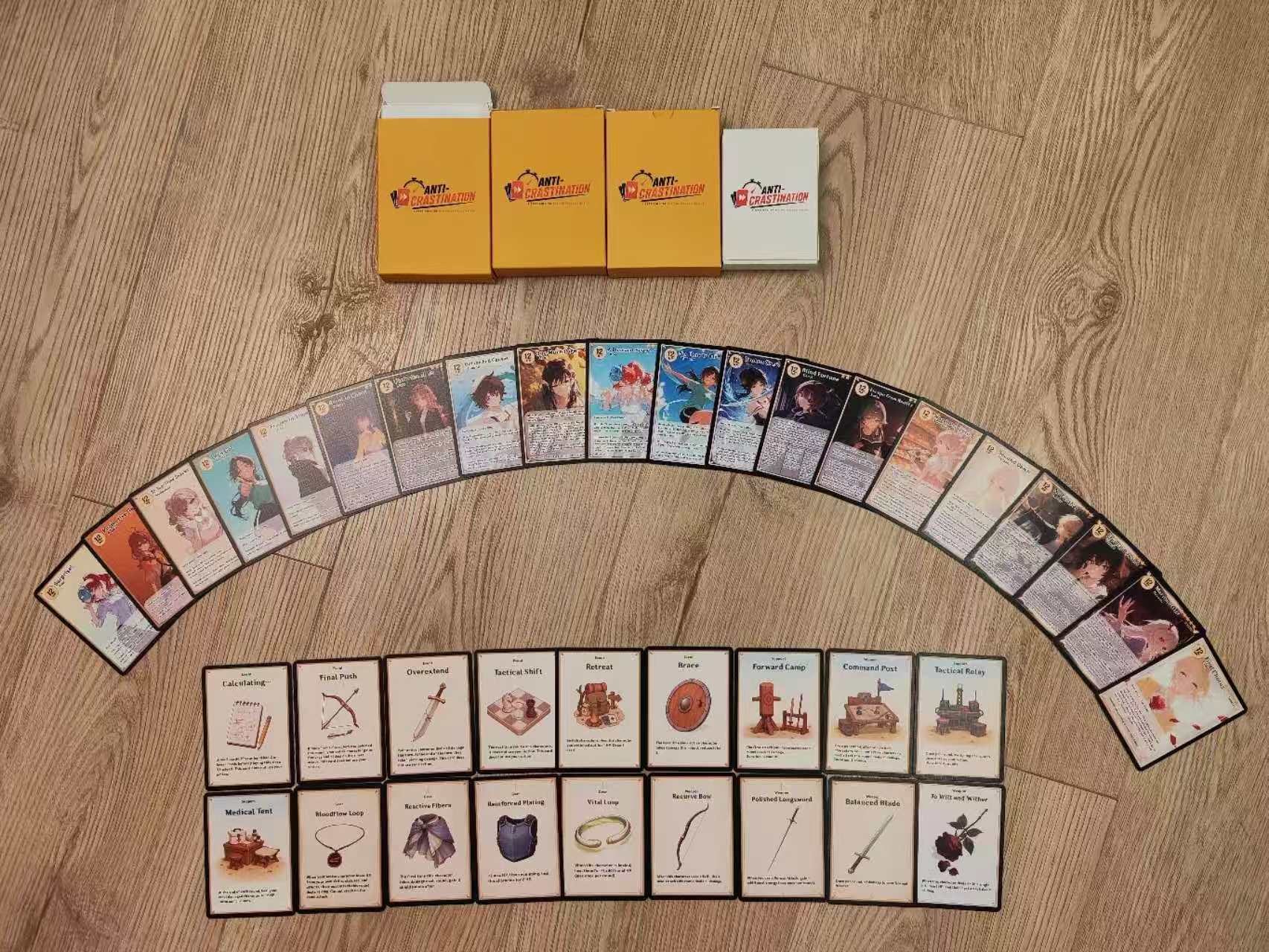
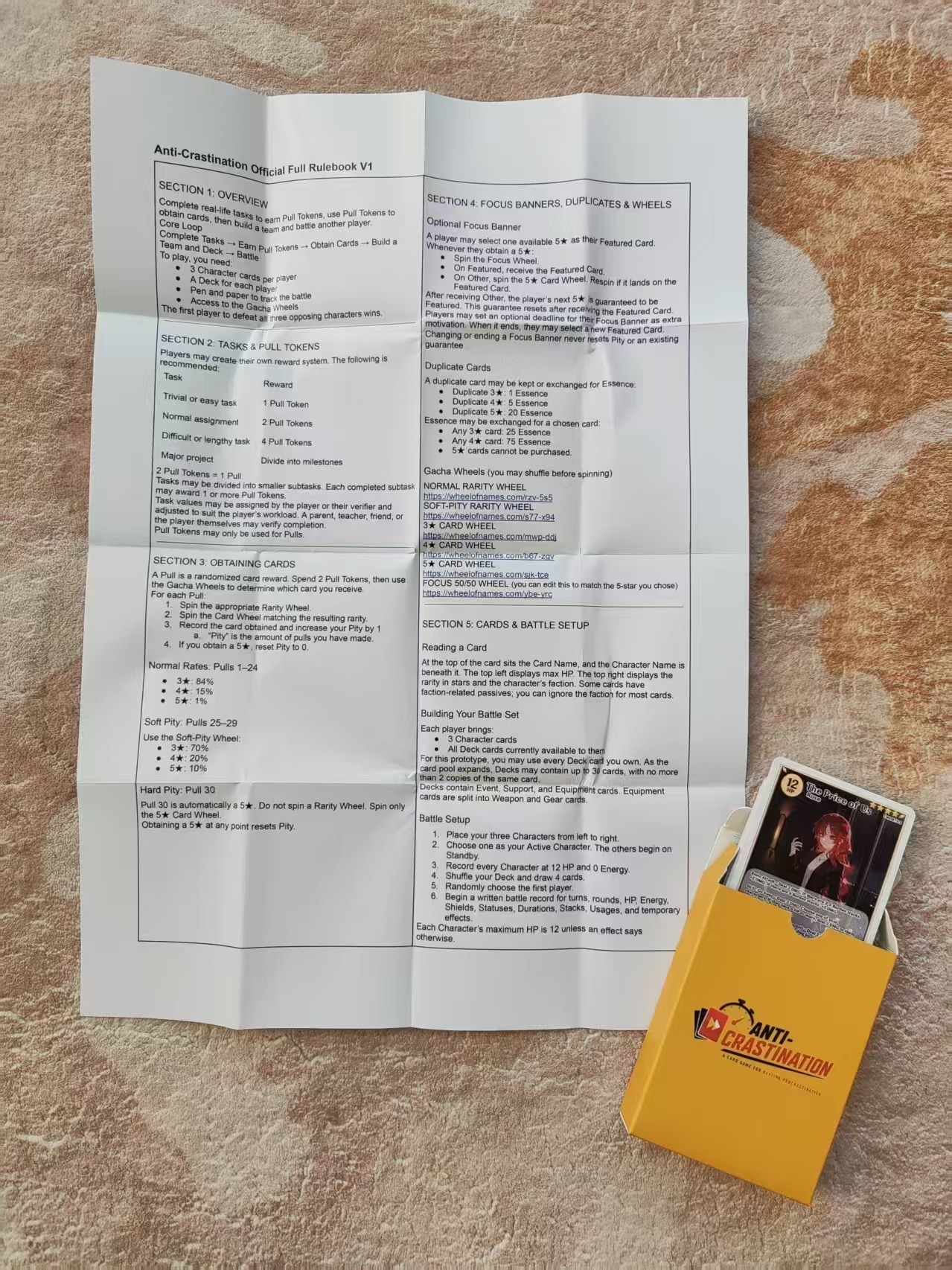
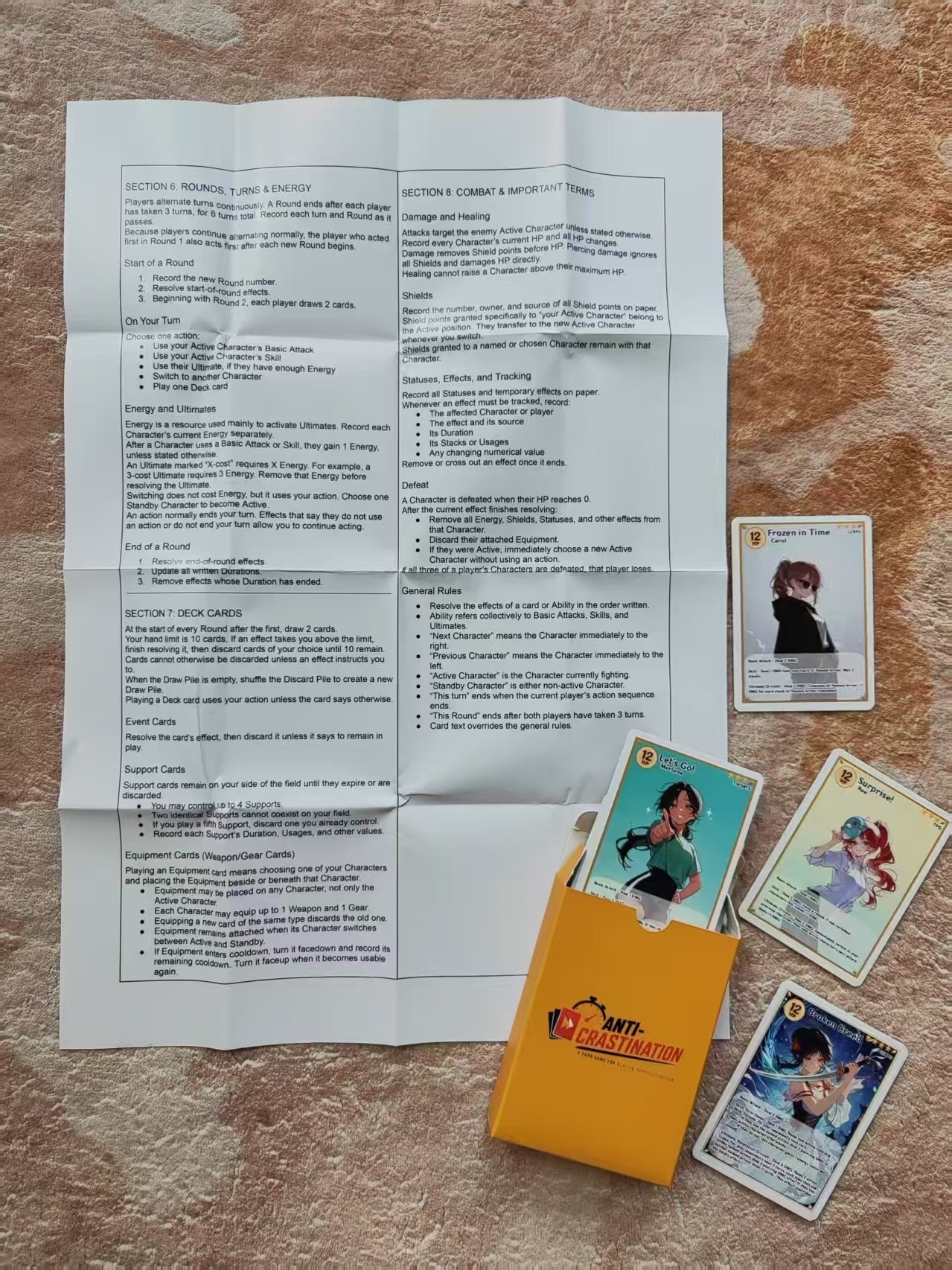
The physical prototype turns abstract progress into something collectible, playable, and visible on a table.
The current prototype contains 40 cards across character and deck-card types, packaged with a compact rulebook and designed to support real tactical play rather than function as decorative rewards.
Digital companion
The website handles the everyday loop while keeping the physical game at the center.
Create and complete real-world tasks.
Convert completed work into randomized card pulls.
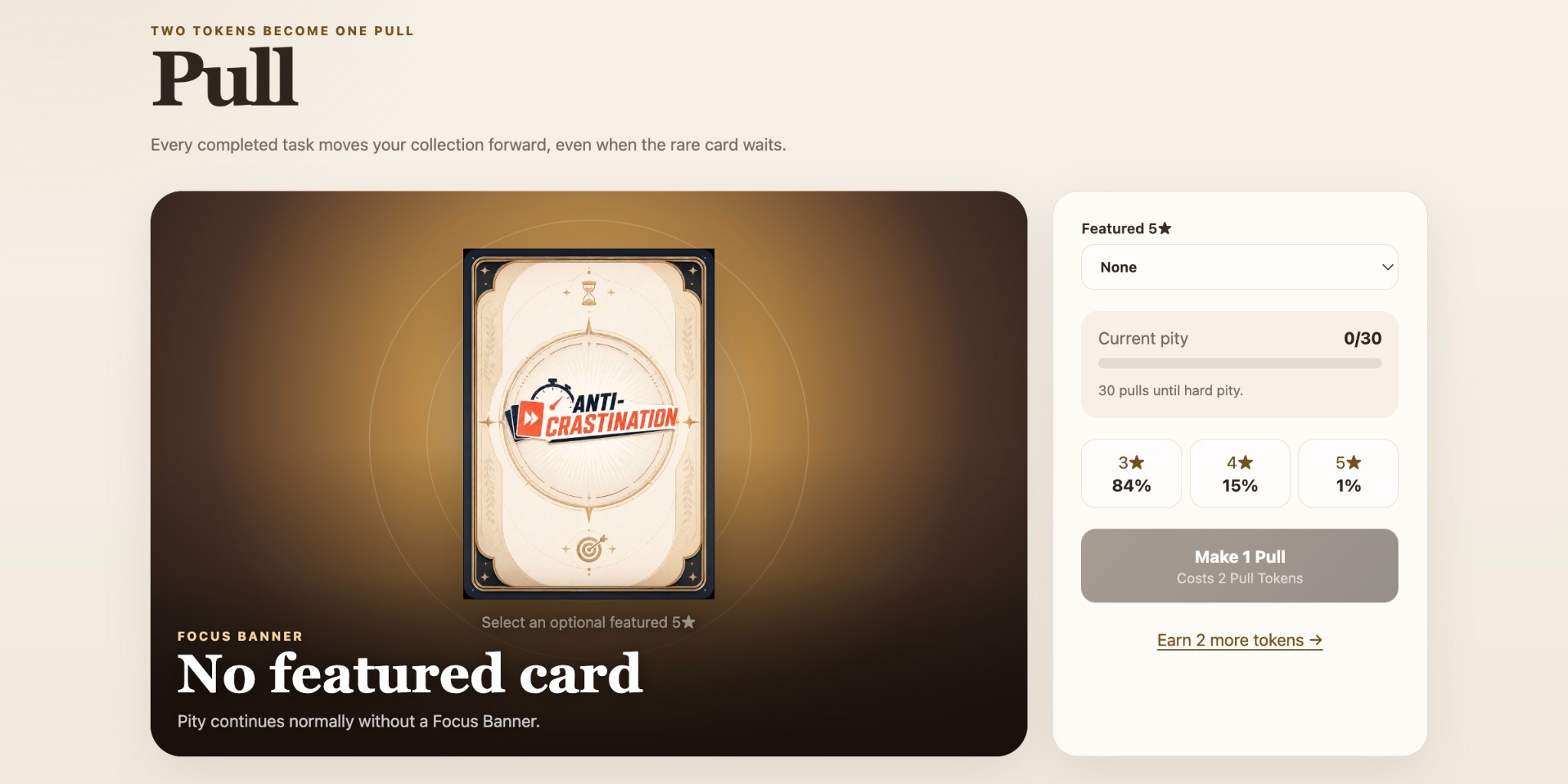
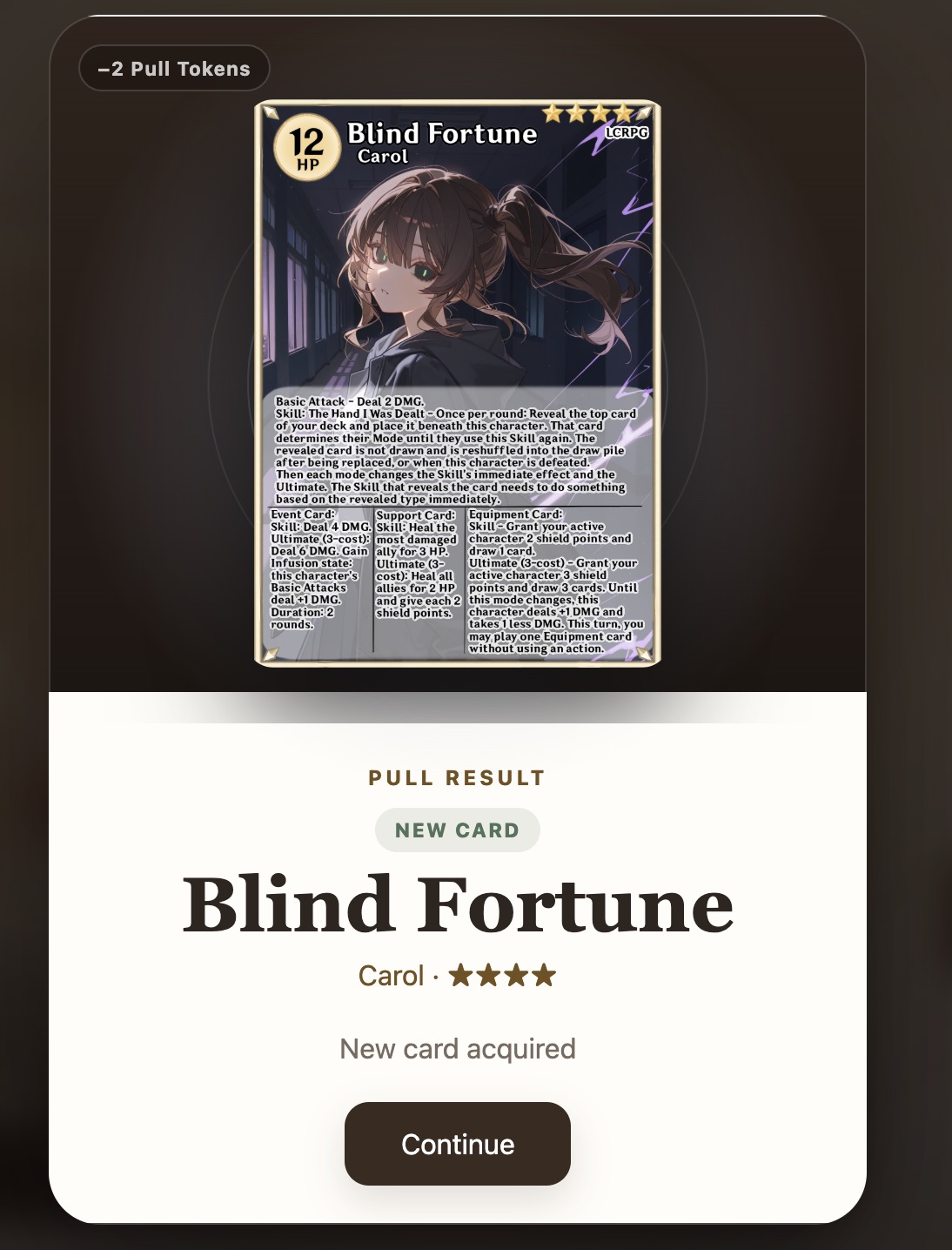
Celebrate meaningful progress through collectible rewards.
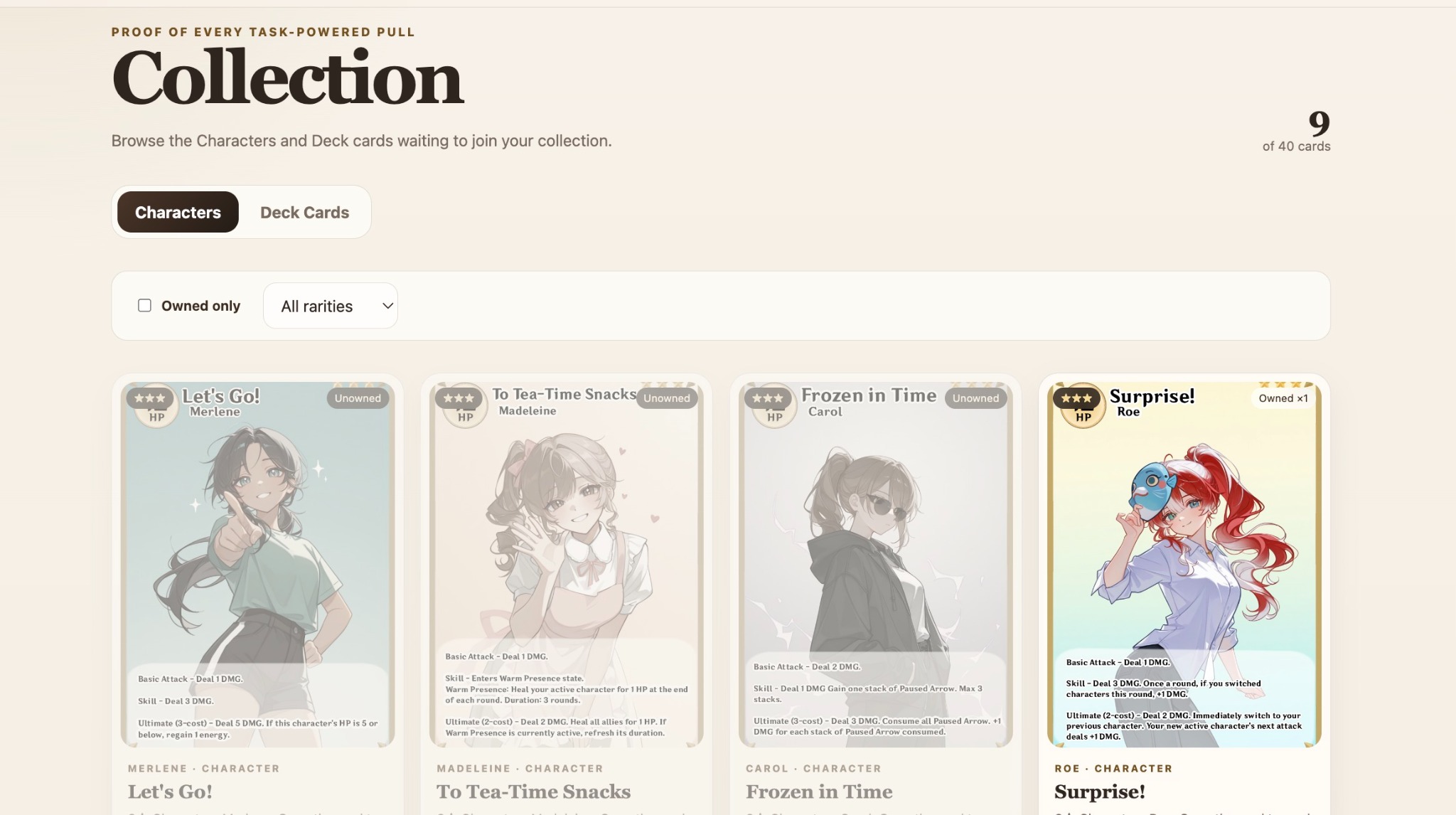
Build a visible archive of work already done. Browse owned cards and discover new characters.
03 · Game system
The card game combines lightweight tactical combat with collectible deck-building.
The prototype includes character, equipment, support, and event cards. These are not decorative rewards: they form teams, enable combinations, and create meaningful choices during play.
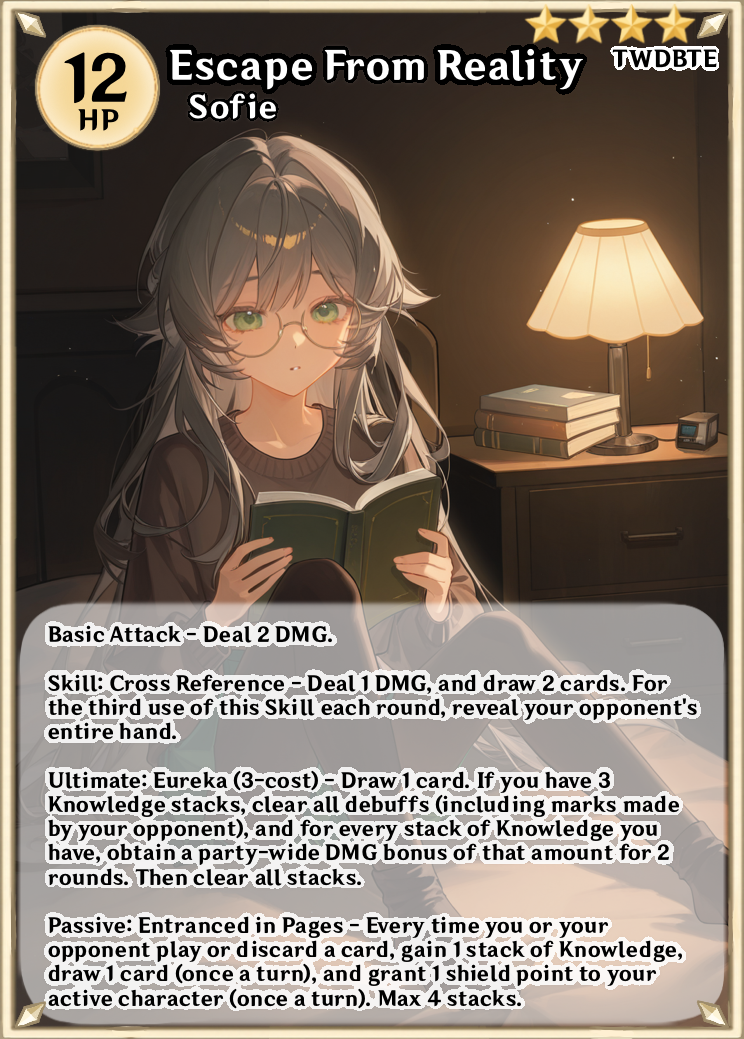
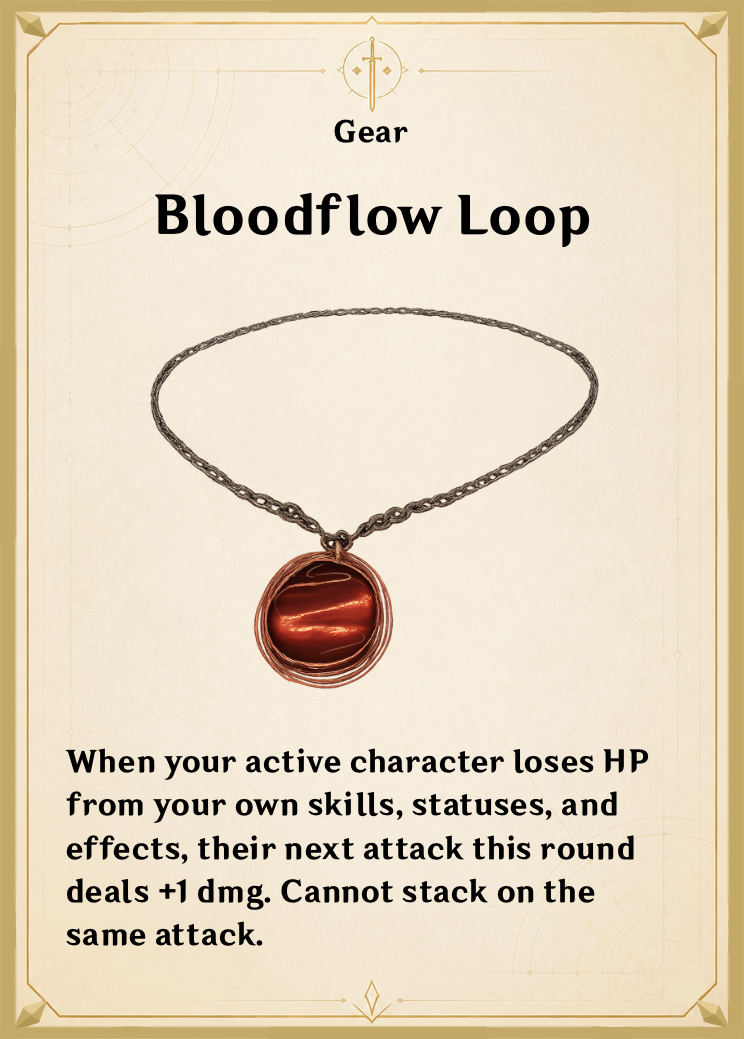
Characters anchor teams and define the deck’s central mechanic.
Equipment supports specific strategies and risk-reward combinations.
Deck cards create temporary advantages, disruptions, and experiments.
A TCG (trading card game) without the T (trading), so now it's just CG.
04 · Design decisions
The project began with a question about gacha games: why can repetitive in-game tasks feel easier to sustain than useful real-world ones?
Why a Gacha System?
I used to play a certain very popular gacha game called Genshin Impact. One day I realized something strange: why are so many players motivated to continue playing, despite how grindy and repetitive the game can get at times? So I deduced: Random rewards create anticipation and reinforce long-term engagement. And then I thought: if this system can push us to complete all these in-game tasks even when they are an absolute bore, could I borrow the system and use it for productive work instead?
Thus, Anti-Crastination was born.
Create anticipation and make the reward moment emotionally legible.
Prevents long unlucky streaks from turning excitement into frustration.
Gives duplicate cards continued value instead of making them dead rewards.
Balances randomness with limited control over the rewards a player wants.
Keeps the first system manageable while still producing a fully playable game.